


Last year the Millennium Project identified and explored future issues of science and technology. This year the management and policy implications of these issues will be explored through interviews with research and development (R&D) managers and policy makers. The results will be available in the 2002 State of the Future. The interviews plus the science and technology issues will also be used to write science and technology scenarios to the year 2025.
There are five questions in the interview. Although responses to all five from each person interviewed would be the best, those you interview are welcome to answer just those questions that they select. If possible, mail the questions to them prior to the interview to give the interviewee time to consider the answers. The project will reimburse the cost of translating the questions and letter.
If the S&T managers or policy makers prefer to submit their answers in writing instead of through the interview process, that is very acceptable. Remind them that no attributions will be made and that they can send their responses directly to <jglenn@igc.org> if they prefer. If they have official positions on these questions in some report, memo, or article, please ask them to include the key ideas and the reference or how one could get a copy of the document.
Telephone interviews are also acceptable, but we prefer them to be done in person.
The sample. A different suggested sample is sent to each Node depending on size and charter of the S&T management of the country(ies) of the Node. In consultation with others in your Node, select people who have responsibility or experience in addressing the interview questions. Views of professors, futurists, business planners, and scholars were included last year; this year the focus is research and development (R&D) managers and policy makers only. Ideally, those you interview will have some experience in both R&D management and policy making.
If possible, try to balance the number of interviews from the areas below. If you interview five people, then ideally you would interview one from each of the following five areas:
1. Physics (basic and applied) in fields such as cosmology and astrophysics, electronics and photonics, energy science, materials science, particle & high energy physics, and quantum mechanics.
2. Biology (basic and applied) in fields such as genetic research & engineering, agricultural sciences, medical research
3. Computational Sciences (basic & applied) in fields such as robotics, computational intelligence, information sciences & technology, mathematics, and scientific simulation.
4. Interdisciplinary sciences (basic & applied) in fields such as biochemistry, cognitive sciences, environmental sciences, nanotechnology, pharmaceutical sciences, space science and technology
5. Science and Technology Policy - Ministries of Science & Technology, National Research Councils, or others who make S&T policy in your country or region.
Interviews can be with government, corporate, NGO (some countries consider their National Academy of Science as an NGO, some consider it part of the government), and/or university R&D managers. Since the US and Japan have larger corporate R&D programs, a higher percent of private sector interviews should be done in those countries compared to countries where much of the R&D is a sponsored and conducted by a combination of government ministries and universities. Each Node will have to judge the proper balance for their situation between public and private sector interviews to represent the best thinking of R&D management and policy in their country or region.
Please complete all the interviews by 1 December 2001.
Millennium Project
Future Issues of Science and Technology
Implications for Management
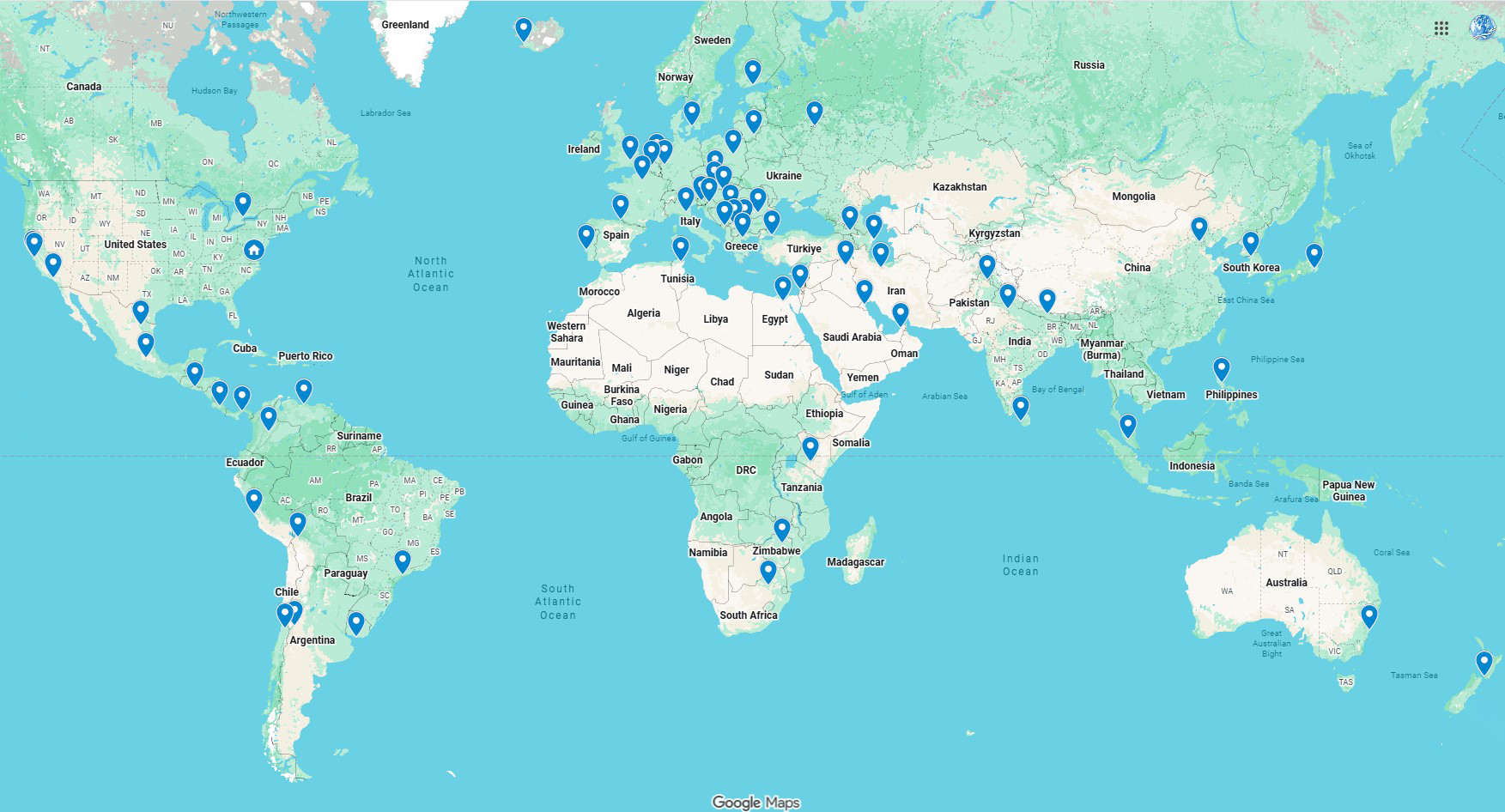
The Millennium Project of the American Council for the United Nations University is conducting approximately 100 interviews around the world with science and technology policy-makers and research and development managers in government, business, and other organizations responsible for the conduct of the scientific research and technological development.
The purpose of these interviews is to document a range of judgments about how best to manage future issues of science and technology. The results will be published in the 2002 State of the Future. All those interviewed will receive a complementary copy. The results will also be used to develop future scenarios and circulated to the international science and technology community.
Last year 237 scientists, futurists, and business planners participated in a two-round questionnaire to identify and rate future issues of science and technology. The responses have been distilled into several questions for your consideration. You have been selected by the Science Attaché from your country to Washington, D.C. or by a Node of the Millennium Project in your region due to your management and policy responsibilities and experience.
Your comments and the comments of other participants in these interviews will not be attributed, but you will be listed in the 2002 State of the Future.
I will call your office to arrange a time for the interview or if you prefer, you or your staff can submit your views in writing either to me or directly to the Millennium Project, American Council for the United Nations University, 4421 Garrison Street, NW, Washington, DC 20016 USA or by email <jglenn@igc.org> with a copy to <acunu@igc.org> or via fax to +1-202-686-5179.
The five questions for the interview are attached to this letter.
Sincerely yours,
(Signed by the Node Chair or Co-Chair)
Attachment:
Five Interview questions about the management implications of the future issues of science and technology:
1. Managing Risks from Science and Technology
Since computer capacity improves faster than biology, some authorities
have argued that we must take seriously the future possibilities of robots
taking over, nanotech self-organizing machines covering everything with
a “gray goo,” and “artificial life” growing beyond human control. These
and other potential unintentional (as well as intentional future threats)
go far beyond almost anything experienced in the past. Governments and
the global community seem unsure how to manage such risks. Scientific sovereignty
is questioned, while we explore the tradeoffs between freedom of scientific
inquiry and public safety.
Question: How can science and technology be managed to reduce undesirable developments, while not destroying the freedom of scientific inquiry or the market incentives that drive technology?
For example, will we need a global technology forecasting and assessment organization with international standards for acceptable risk? Or are there better mechanisms to manage risk? What kind of management approaches can be used to create the controls within and among scientific fields to prevent negative developments?
Under what circumstances ought intervention be permitted in scientific
research? Will new treaties, protocols, and/or laws be necessary?
2. Expanding S&T’s role in policy formulation
Many political leaders around the world make decisions involving S&T
matters about which they have little understanding. Other political decisions
would benefit from input from the S&T community that is too often not
sought or offered in a form that is not useful or is disregarded entirely.
The chasm between the general public’s perceptions and profound S&T
developments that will radically and rapidly change their lives seems to
be growing rapidly. As democracy evolves, political leaders have to be
more responsive to public perceptions in policy process. Both the general
public and political decision-makers seem to be left behind in the advancing
S&T knowledge revolution.
Question: What will improve the use of S&T information in the policy process?
For example, should S&T managers take responsibility to improve the understanding of their work both government officials and the public? Should they assume responsibility for preparing society for the pace of change that will be brought about through science, and if so, how would you define their role?
What would make a difference in the media’s role in public understanding? What would make National Academies of Science committees composed of media representatives and scientists or other related groups more effective?
How could cabinet status for S&T in governments make a difference? How could regular briefings on S&T issues for decision-makers be effective?
What should be done when experts disagree about matters that affect
pubic policy?
3. Interdisciplinary S&T Management
The convergence and synergies among scientific fields, for example,
biotechnology, nanotechnology, and computation (artificial intelligence,
robotics) will lead to breakthroughs that will have profound implications
for improving the human condition. Unfortunately, there are significant
barriers to conducting interdisciplinary research due to funding categories,
proximity problems of personnel and equipment, differences in lexicon and
language, and other management barriers to S&T collaboration among
different fields. Although many unique solutions have been proposed, little
research has been conducted on the requirements for properly integrating
S&T disciplines.
Question: What management approaches and priorities will improve the benefits of interdisciplinary S&T research for humanity?
For example, how can the barriers to interdisciplinary collaboratories, interdisciplinary review processes, and interdisciplinary funding be overcome? Is it more effective to commit to big complex projects like the Apollo Project Moon landing that stimulate interdisciplinary S&T?
How would you prioritize the most pressing issues in managing and enabling
interdisciplinary research? And what new approaches do you believe are
worth trying?
4. Globalization and S&T Management
Globalization is forcing continuous re-examination of government and
corporate S&T priorities, investments, and R&D management practices.
When to compete? When to cooperate? Talent migrates physically and electronically.
Multinational corporate mergers and multilateral government agreements
are constantly evolving. The most serious problems S&T can solve are
global in nature and transnational in solution (water, energy, climate
change, natural resources, epidemics or plagues, terrorism, and other potential
S&T collaborations). Trade-offs between national vs. global investments
and priorities have been added to the usual list of trade offs, such as
trade-offs between public vs. private investments, long?term vs. short?term,
and basic vs. applied.
Question: How will the nature of R&D management have to change in such a dynamic environment?
For example, will the increasing calls for transparency, accountability, and participation in decision-making force S&T investment trade-offs to be made more explicit? and if so, by what mechanisms?
How can a proper balance between national and global investments be
continually re-assessed?
5. What other S&T management issues have we not discussed
that will be important to address the future issues of science and technology?
1. Translate the Invitation Letter as appropriate. You are welcome to use Millennium Project stationery, or the stationary you have created for your Millennium Project Node, or your own institution’s stationery for the letter. Please do what is most appropriate for your situation. The invitation letter can also be sent via email.
2. Please write your report of the interview as soon as possible after completing the interview.
3. Send your write-up of each interview as soon as it is done via email to <jglenn@igc.org> with a copy to <acunu@igc.org>. Please do NOT wait until you have finished all the interviews to send all at one time.
4. Read the first question to the interviewee. When he or she has finished answering, then read the second question. If the interviewee would like to skip a question, that is ok. They do not have to answer all five, but we would prefer if they do. The “for example” questions are to help develop the conversation during the interview to address the main question. The interviewee does not have to comment on the “for example” questions.
5. As you write up the interview, please keep in mind that senior UN, government, corporate, and NGO officials around the world read the Millennium Project reports. What is worth their time to read? What did the interviewee say, that other senior officials don’t know, that would be useful to consider?
6. Please include the name, title, institutional affiliation, address, and email or fax number for each interviewee. Also, indicate whether they are R&D managers or S&T policy-makers.
7. Please complete all the interviews by 1 December 2001 and
email me at jglenn@igc.org with any
questions.
Best wishes,
Jerry Glenn, director
Millennium Project
American Council for the United Nations University
www.millennium-project.org