


This chapter shares the views of decisionmakers and policy advisors – the recipients or consumers of futures information – about the problems they have encountered with the use of early warning information in their decisionmaking. This second source of information provides richer, subjective information to the impediments to the successful implementation of futures research in decisionmaking, and hence, a source of key lessons learned for Chapter 5: Conclusions and Recommendations.
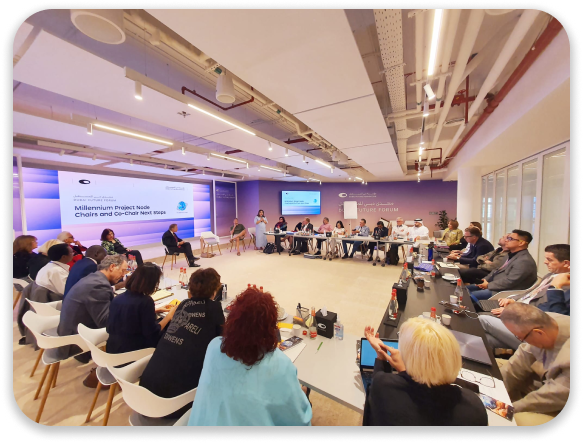
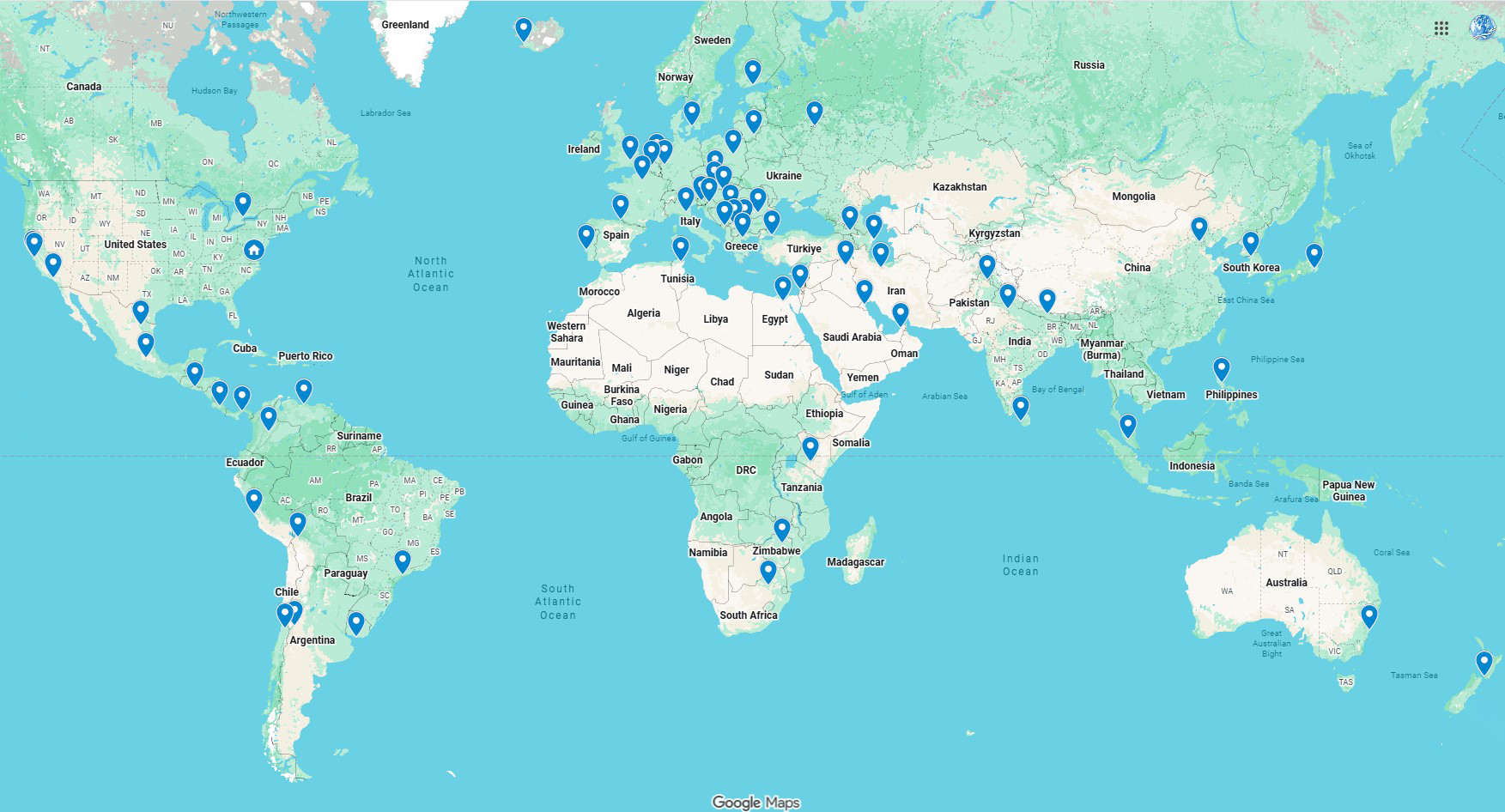
Seventy-four interviews were conducted with decisionmakers and policy advisors via Millennium Project Node chairs around the world. The interviews asked:
The interviewees were presented with a list of possible impediments to the timely use of futures information in decisionmaking. They were also asked to add to the list. The given list included:
8. Impediment from lack of policy maker professionalism
9. Non-financial resource impediments
10. Planning system impediments
11. Moral and Ethical Issues
Financial impediments
Political leaders use the excuse of financial impediments to justify their inaction. It’s a matter of priorities, not money.... Money is being used for secondary and silly projects, and does not reflect visions.... In Slovakia there was a chance to create a nation-wide discussion to create a new vision of a sustainable society, but politicians and policy makers have their own interests connecting with power.
Increasing democracy increases budget accountability; hence, we have to be more responsible on financial matters. Previously, we spent on what ever we wanted.... Resource allocation is based on a model of society that is decades old and does not reflect current society; secondly, the requirement for greater financial accountability actually reduces flexibility.
Too often political institutions only express interest in problems to get money from the state budget. They are less concerned if it is a priority for society as-a-whole or if they are proposing the correct solution. Ministries want the more expensive approach, which is very often less effective. For example, the Russian-American space project is not financially efficient.
I do not think that there are inadequate resources; it is how we use what we have. A great part of our resources is spent on the development of the military complex and more middle-level developed countries are involved in this.
Institutional impediments are less important in authoritarian regimes.
The lack of institutional and legislative infrastructure is blocking investment into Russian industry…. Banks have money, but there are not many channels, which transfer financial resources to small and medium sized companies. As a rule, banks deal with solid, big clients. There should be some transitional institutions between banks and companies. Also, there is no protection for investors’ rights, which hampers investment.
Why are space opportunities and achievements not implemented in other spheres of activity and in industry? I think that one of the reasons is the isolation of our space agency’s activities from the Ministry of Economic Affairs and the Ministry of Industry.
The lack of coordination also affects the time between a problem’s emergence and implementation of appropriate actions.
International political institutions serve the interests of a small part of the population and keep the interests of a couple of nations in the focus. The attempt of some nations to build the world in accordance to their own model and interests will not be successful and is a very dangerous illusion. Partnership of civilization is a model of policy development and implementation of the new millennium, but international and national political institutions do not understand it.... Many developing countries lack the necessary organizations and groups, such as NGOs.
Although it is true that coordination yields better assessments and solutions to social problems, which are most of the time very complex and ill structured, such coordination is one of the hardest objectives to achieve. The problem lies in part in the flawed process of structuring complex problems; the visibility of the problems that each government institution deals with (for example, trading with a neighbor may be higher on the political agenda than the problem of aging minorities).
Political early warning time horizons are shorter than the lead-time of general humanitarian and social problems. Political early warnings should lead immediately to quiet UN talks to identify solutions. We need to create and use more than just political-diplomatic methods to resolve conflict and then we should be more selective about the methods we use. For example, the Czechoslovakian example was resolved through the World Court through a three years process that reduced the ethnic emotions in the issue. Other conflicts have been resolved by local courts, which removed the political issues. Legal methods should be used more.
The early warnings come without advice on the ultimate trade-offs. As a result, they are hi-jacked by single-issue groups, and governments find it very difficult to adjudicate between the various interests, which do eventually emerge. These issues are not black and white, or even shades of gray, they are often apples versus pears. There is a wide range of uncertainty.... There is no mechanism for arriving at global views - where the emerging key issues are now all global. Even the G8 are, in the context of WTO, in conflict. Ironically, the G9-99 have been more constructive in implementing WTO policies.
Any problem is interdisciplinary and could be solved more effectively and rapidly if different actors are involved from the start.... If we distribute this information post factum then industry and regions need time for adaptation of achievements, but if they are involved from the beginning, then it could shorter time as well as improve financial possibilities.
Consensus among different actors and transparency of policy itself have a great impact and reduce the confusion as to who has the responsibility for implementation.
I don’t think China has political impediments.... The centralized leadership and pluralistic economy will cause conflicts, just as in the current China.... If suggested actions are in conformity with ideology and the key positions of national/international policy, then these actions are accepted. In this case, all of the obstacles play a secondary role.... Contradictions can be solved, financial resources can be found.... Ideology plays the key role. Policy makers will only use the results of this questionnaire that is in conformity with ideology.
Political instability hampers the development of coordinated actions and inhibits the formation of a common view of our present and future.
The problem does not seem to be one of having the information about the early warning, but of recognizing its importance vis a vis the position, interests, motivations, and beliefs of the particular stakeholders. If the decisionmaker or stakeholder does not feel some kind of threat, it may not act upon the information.
The impediments do not stem from gender roles such as men vs. women or from racism, but the meaningful distinction is based on community size... Small communities are at a great distance from the sources of information, therefore they are more conservative and resistant to changes.
Stereotypes play a very important role at every level of thinking. In order to conform to new realities, one should change their own stereotypes of thinking and behavior.... We are all in a transition to a knowledge-based society. In order to move forward one should understand what is changing around us, what is my (or my corporation’s or my country’s) place in these new conditions, what should be changed and how we should change ourselves, our strategy, our models of thinking, our tools and methods.
The stereotypes of thinking which have been formed within industrial society hamper the development of adequate actions and have resulted in ineffective distribution of financial resources, political barriers and weak political institutions. The strongest obstacle is the paradigm of thinking of industrial society.
Some decision-makers do not listen well. For example, an early warning was given to Stalin that stated that the war would begin in 1941, but he didn’t believe it and said, "No, it will start in 1942." In this case, a two-track approach might have been necessary.
Many of political leaders are interested in good jobs, but they are lax about their work. In this respect a great number of countries of central and Eastern Europe are taking on the characteristics of banana republics.
Western society has lost the sense of evolution toward goals.… The cult of leisure has been starting to dominate and at the same time attitudes toward work are changing.... Motivations of people push or hamper the implementation of actions.... Lack of a sense of sacrifice, materialistic attitude.
I do not think that fear of making a mistake should be at the top of the list. Instead, the lack of confidence and morality, and ideology play the key roles. In addition, the loss of goals and ideas, which form the background for building policy at different levels as well as the building of family and the lives of people are key.
In-depth understanding of the problem itself is already 50% of successful solution of a problem…. Provide information that reduces uncertainty of response to a decision.... Well-explored problems provide the opportunity to develop adequate actions, to understand the consequences and mutual influence and interdependence of actions, and different alternative approaches to the problem’s solution. But this is more and more difficult to do: problems become more and more complex; one may observe a lack of information about uncertainty of consequences.... Complexity theory can also help to develop effective actions and mechanisms.
Modeling of different influencing events and their interdependence could provide an in-depth view into the problem and actions. It gives the opportunity to keep the problem under control and to develop adequate mechanisms of regulating, to explore the sequences of actions, linkages between different branches of development in their evolution. Such network modeling gives rise to new ideas, analysis of priorities, and clarifies resource requirement.
Too often previous early warning signals have proved to be unreliable.... I would like to add: the need for an inventory of capabilities which nations and regions have as well as their targets and priorities.
I think there is an important role for science and education and even NGO’s to help form policy makers’ world outlook. It could help them understand the new conditions of change, to adapt their actions to ideology, perhaps even to affect ideology itself.
Early warnings that go public and include very sensitive information can make problems worse. Yet, it is necessary to make some kinds of early warnings public like information about nuclear issues and human rights. Policy makers need a sufficient depth of personnel to provide early warning information. It is difficult for the public to understand why preventive actions cost less than solving the problem when it occurs.