

Overview
Updated October 21, 2026
Population and resource balance depends on population size, age structure, settlement patterns, and how resources are consumed and distributed. World Population Prospects 2024 reports that global fertility fell to 2.25 births per woman in 2024 and projects a population peak of about 10.3 billion in the mid-2080s. Yet 63 countries and areas had already reached their population peaks by 2024, while much of sub-Saharan Africa faces continued rapid growth, expanding demand for education, jobs, housing, and food.
Aging is reshaping the relationship between populations and the resources available to support them. By the late 2070s, people aged 65 and older are projected to outnumber children under 18 worldwide. Rising ratios of older to working-age people put pressure on pensions and care systems, although economic effects also depend on employment, productivity, and health. Longer lives do not automatically mean more years in good health. Geroscience aims to delay age-related disease and disability; translating promising experimental findings into safe, effective treatments for people remains a research challenge.
Migration connects these demographic differences: UN DESA estimates 304 million international migrants in 2024. It can relieve labor shortages and generate remittances, but can also deplete essential skills in origin countries and increase local demand for housing and services. Outcomes depend on employment access, integration, and investment, while refugee protection and internal displacement present additional needs beyond matching workers to jobs.
Resource pressures are highly unequal. The International Resource Panel reports that high-income countries use about six times as much material per person as low-income countries. Under a continuation of historical trends, global extraction could rise 60% between 2020 and 2060. Population growth amplifies demand, but consumption levels, technology, and the design of food, housing, and transportation systems shape its environmental consequences; a smaller population does not by itself ensure sustainability.
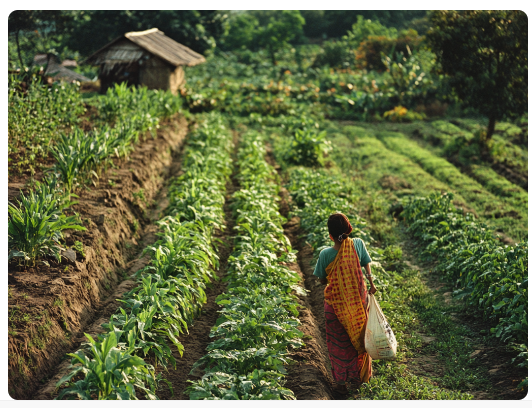
Food security exposes both demographic pressures and failures of access. SOFI 2026 estimates that Africa, including North Africa, had approximately 309 million undernourished people in 2025, broadly comparable with Asia’s estimated 292 million. Africa’s rapid population growth can offset reductions in the proportion experiencing hunger, while conflict, poverty, and climate shocks compound vulnerability. Worldwide, approximately 2.7 billion people could not afford a healthy diet.
Actions to Address Global Challenge 3
Updated October 23, 2026
- Enable people to make and realize voluntary reproductive choices
Actors: Health and education ministries; UNFPA; FP2030; donor governments and foundations.
Expand access to contraception, reproductive and child-survival health services, and accurate information, and keep girls in school through secondary level. Address the barriers that keep people from having children they want, including unaffordable care and insecure employment. Replace lost donor funding before supply chains and community health services break down. Programs should be judged by reproductive autonomy and well-being, without birth targets.
Basis: In 2024, donor governments provided US$1.36 billion for family planning, one of the lowest levels since 2012. The United States supplied 43% of that, then terminated most of its global family-planning projects in 2025 (KFF). UNFPA’s State of World Population 2025 finds that economic and social barriers, not only lack of contraception, keep people from realizing their reproductive intentions.
Track: Demand for family planning satisfied by modern methods (SDG 3.7.1); donor family-planning funding (KFF annual tracker); girls’ lower-secondary completion (SDG 4.1.2); stated versus realized fertility intentions, disaggregated by income and location. - Adapt employment and pension systems to changing age structures
Actors: Labor and finance ministries; pension authorities; employers; education and training providers.
Connect young people with education and decent work, and support retraining throughout life. Make continued work feasible for older people who want it, while protecting those who cannot work longer. Extend pension protection to informal workers and unpaid caregivers. Review pension adequacy and financing together, taking account of differences in health, occupation, and life expectancy when retirement rules change.
Basis: People aged 65 and older are projected to outnumber children under 18 by the late 2070s (WPP 2024). UN DESA’s Policy Brief 167 sets out the different needs of growing and aging populations. ILO’s World Social Protection Report 2024–26 documents gaps in pension coverage and adequacy.
Track: Youth not in employment, education, or training (SDG 8.6.1); old-age pension coverage (SDG 1.3.1); employment rates at ages 55–64 and 65–69 (OECD/ILO); old-age poverty rates. - Organize health and care services around maintaining function and independence
Actors: Health ministries; primary-care systems; local governments; long-term care providers.
Build assessment of mobility, cognition, nutrition, hearing, and vision into accessible primary care, with referral and follow-up. Expand affordable long-term care, support unpaid caregivers, and adapt homes and neighborhoods to changing abilities.
Basis: WHO’s Integrated Care for Older People handbook provides a care pathway that links assessment to personalized support.
Track: Healthy life expectancy (WHO); countries implementing integrated care for older people (UN Decade of Healthy Ageing monitoring); unmet long-term care needs and out-of-pocket care costs, by income, sex, and location. - Advance research on extending healthy life and delaying age-related disease
Actors: Public research funders (NIH/NIA and counterparts); philanthropic funders; trial investigators; regulators.
Fund geroscience from basic discovery through well-designed human trials. Require trial registration, transparent reporting, independent replication, and assessment of adverse effects. Work with regulators on clinically meaningful endpoints: disease, disability, and functioning, not biomarkers alone. Assess affordability and access as interventions near use.
Basis: NIH’s geroscience program investigates whether targeting aging processes can delay multiple diseases. A CALERIE trial analysis found that two years of calorie restriction produced a small change in one DNA-methylation measure of the pace of aging, but not in two others; it did not establish reduced disease or longer life.
Track: Registered human trials targeting aging mechanisms (activity only); replicated effects on disease incidence, disability, and functioning; adverse events. - Develop migration arrangements that benefit migrants and both origin and destination communities
Actors: Labor, migration, and foreign ministries in origin and destination countries; employers; IOM; UNHCR; training institutions.
Expand lawful labor pathways where needs are demonstrated, recognize qualifications, and protect workers from exploitation. Jointly finance training in origin countries, for example through skills partnerships, so that both those who stay and those who move are trained. Monitor shortages of essential workers in origin countries. Maintain refugee protection independently of labor-market needs.
Basis: UN DESA estimates 304 million international migrants in 2024. The World Bank’s World Development Report 2023 distinguishes labor-market matching from protection needs and examines the gains, costs, and conditions for success. Global Skill Partnerships have been piloted by Belgium, Germany, the UK, Australia, and New Zealand.
Track: Recruitment costs borne by workers (SDG 10.7.1); migrant employment and earnings relative to qualifications; health-worker emigration from countries on WHO’s health workforce support and safeguards list; availability and retention of essential workers in origin countries; refugees’ access to protection and basic services (UNHCR). - Fund housing and urban services for actual and anticipated populations
Actors: National and local governments; urban planning and housing agencies; utilities; UN-Habitat; development banks.
Align investment in housing, water, sanitation, transport, and care with population growth or decline, aging, migration, and displacement, including underserved existing residents. Plan land and transit ahead of growth, adapt services where populations are shrinking, and build disaster-risk management into land-use and service planning. Adopt sensors and digital management where demonstrated service improvements justify their full costs, with privacy safeguards and non-digital alternatives.
Basis: Under the UN’s harmonized classification, cities hold 45% of the world’s population. Two-thirds of population growth to 2050 is projected to occur in cities, and sub-Saharan Africa is the only region where rural populations are still growing significantly (World Urbanization Prospects 2025).
Track: Urban population in slums or inadequate housing (SDG 11.1.1); convenient access to public transport (SDG 11.2.1); safely managed drinking water (SDG 6.1.1); housing cost burden and overcrowding. - Reduce material demand in high-consumption systems while meeting basic needs
Actors: National governments; the EU and OECD; manufacturers and retailers; public procurement agencies.
Use product standards, procurement, repair rights, reuse, and shared infrastructure to cut avoidable material use, starting with the housing, transport, food, and energy systems that have the largest footprints. Count imported as well as domestic resource use, and protect access to adequate housing, nutrition, and mobility where needs remain unmet.
Basis: High-income countries use about six times as much material per person as low-income countries. On current trends, global extraction could rise 60% between 2020 and 2060 (International Resource Panel, Global Resources Outlook 2024).
Track: Material footprint, total and per capita (SDG 8.4.1 / 12.2.1); domestic material consumption per unit of GDP; product lifetimes and reuse rates. - Make healthy diets affordable and accessible
Actors: Governments (social protection, agriculture, education); WFP; local food distributors.
Identify which households cannot afford a healthy diet, and address the income, price, and access barriers they face. Combine social protection with measures that make nutritious food more available, including school meals and local distribution.
Basis: About 2.7 billion people could not afford a healthy diet in 2025 (SOFI 2026).
Track: Number and share unable to afford a healthy diet (SOFI); moderate or severe food insecurity (SDG 2.1.2); minimum dietary diversity among children aged 6–23 months; coverage of school meals and social assistance among the households with the largest gaps. - Shift diets where consumption of resource-intensive foods is highest
Actors: Public procurement authorities for schools, hospitals, and armed forces; national dietary-guideline bodies; agriculture, health, and trade ministries.
Align public procurement, dietary guidelines, and subsidies with diets lower in red and processed meat in high-consumption countries, while protecting access to nutrient-dense foods, including animal-source foods, where diets are inadequate.
Basis: The 2025 EAT–Lancet Commission finds food production is the main driver of breaching five planetary boundaries, and food systems account for about 30% of greenhouse gas emissions. It models that a shift to its reference diet could prevent up to 15 million premature deaths a year.
Track: Per-capita supply of red meat and legumes by country income group (FAOSTAT); food-system greenhouse gas emissions; adoption of sustainability criteria in national dietary guidelines and public procurement. - Halve per-capita retail and consumer food waste by 2030 and reduce supply-chain losses
Actors: Retailers and food-service firms; municipal waste authorities; producers; national governments; UNEP and FAO.
Set dated national baselines and target the stages where edible food is lost. Improve storage, transport, purchasing, and portioning. Invest in cold chains where avoided losses justify operating costs, electricity needs, and refrigerant impacts.
Basis: In 2022, 1.05 billion tonnes of food was wasted at retail, food-service, and household level, 60% of it in households (figures include inedible parts). A further 13% of food is lost between harvest and retail (UNEP Food Waste Index Report 2024; FAO). UNEP and FAO’s Sustainable Food Cold Chains weighs refrigeration’s benefits against its energy and climate costs.
Track: Food Waste Index (SDG 12.3.1b) and Food Loss Index (SDG 12.3.1a), measured against dated national baselines; energy use and emissions of cold-chain investments. - Scale farming practices that improve resilience and resource performance under local conditions
Actors: Agriculture ministries and extension services; farmer organizations; CGIAR and national research institutes; river-basin authorities.
Combine extension, soil management, adapted crop varieties, and locally appropriate water management. Support precision tools where field comparisons show benefits after equipment, training, and maintenance costs. Assess water use across the whole basin before treating irrigation improvements as water savings. Run multiseason trials of salt-tolerant crops where water, land, drainage, and markets are suitable, and expand only where trials show viable production and acceptable effects on soil and groundwater.
Basis: An extension program reaching about 21 million Chinese smallholders raised grain yields while reducing nitrogen fertilizer (Cui et al., Nature, 2018). FAO’s guidance on real water savings distinguishes field efficiency from reduced water consumption. A UAE study of Salicornia reported useful yields from saline irrigation alongside substantial salt leaching.
Track: Proportion of agricultural area under productive and sustainable agriculture (SDG 2.4.1); water-use efficiency (SDG 6.4.1), read alongside basin-level water consumption and groundwater trends where irrigation is involved; net farm income and yield stability across seasons, including drought years; soil and groundwater salinity at saline-agriculture sites. - Expand nutritious, lower-resource protein options and evaluate emerging alternatives
Actors: Food programs and producers; public research funders; food-safety regulators.
Make affordable legumes and other suitable plant proteins easier to obtain and prepare. Assess fermented, cultivated, and insect-based proteins against these established options for safety, nutrition, cost, and environmental performance. Assessments should separate measured pilot or commercial data from projections, disclose assumptions about scale and energy supply, and be updated as operating evidence accumulates. Condition continued public funding on published results.
Basis: UNEP’s What’s Cooking? assesses the potential benefits and uncertainties of novel protein alternatives.
Track: Lifecycle land, water, energy, and emissions per unit of protein, with measured and projected values reported separately; nutritional quality relative to established protein sources; production cost and retail price against conventional equivalents; actual substitution in diets.
Regional Considerations
Updated October 24, 2026
Sub-Saharan Africa: Sub-Saharan Africa is a major center of projected population growth over the coming decades. Fertility is falling across much of the region, but population growth reflects both continuing high fertility in many countries and large younger generations entering their childbearing years. World Population Prospects 2024 finds that nearly all countries with total fertility rates of at least four births per woman in 2024 were in sub-Saharan Africa. It projects that several, including Niger, Somalia, and the Democratic Republic of the Congo (DRC), will double in population by 2054. The World Bank’s Africa’s Pulse projects that the region’s working-age population will grow by more than 600 million between 2025 and 2050, and estimates that only 24% of new workers now obtain wage-paying jobs. The opportunity this creates depends on productive work, of which wage jobs are only one form. Cities and towns are expanding, yet World Urbanization Prospects 2025 finds that this is also the only region where rural populations are still growing significantly, so housing, transport, schools, and jobs are needed in both. Most African-born international migrants live in another African country: IOM’s World Migration Report 2026 counts about 25 million of 45.8 million in 2024.
Food affordability is a major constraint. Across Africa as a whole, two-thirds of people could not afford a healthy diet in 2025. FAO’s Food Outlook forecast sub-Saharan Africa’s food imports at US$65 billion in 2025, about a third of it for cereals, leaving the region exposed to swings in international prices, exchange rates, and transport costs. Mineral demand brings both opportunity and vulnerability: the DRC mined about three-quarters of the world’s cobalt in 2025, but low prices led it to suspend and then cap exports. Conflict disrupts livelihoods and services and forces people from their homes. At the end of 2025, Sudan had 9.1 million people internally displaced by conflict and violence, the most of any country. The DRC recorded 9.7 million conflict-related internal displacement movements during the year, including repeated displacements.
Middle East and North Africa: Population trends in the Middle East and North Africa (MENA) now diverge sharply. UNFPA’s State of World Population 2025 puts fertility in 2025 at 1.7 births per woman in Iran and 1.8 in Tunisia, below the replacement level of about 2.1, but at 3.2 in Iraq. These differences create different needs: for schools and jobs where young people are numerous, and increasingly for pensions and care where populations are older. Employment is already a weak point. In 2023, youth unemployment was 28.0% in the Arab States, the world’s highest, and 22.3% in North Africa. Across the ILO’s Arab States and North Africa grouping, 44.2% of young women were not in employment, education, or training, compared with 28.1% worldwide. Gulf economies also depend heavily on migrant workers.
MENA is also the world’s most water-scarce region. A World Bank report projects that renewable water per person will fall below the absolute-scarcity threshold of 500 cubic meters a year by the end of this decade. Importing food reduces the domestic water and land needed to meet food demand, but it exposes countries to trade disruptions. Greater financial resources give Gulf governments more options to cushion food-price shocks, although they remain exposed to supply disruption. The disruption of shipping through the Strait of Hormuz during the 2026 war showed how quickly those risks reach farms: the Middle East supplies nearly a quarter of global urea exports, and urea prices rose 80% between February and April 2026. Conflict also shapes needs directly. In Gaza, the Integrated Food Security Phase Classification projected that about 1.4 million people, 67% of the population, would face crisis-level food insecurity or worse from July to December 2026, with the population almost entirely dependent on external assistance. In Syria, about 1.67 million refugees and 1.92 million internally displaced people returned home between December 2024 and May 2026, many to damaged housing and limited services.
Asia and Oceania: Asia and Oceania contains the world’s two most populous countries and some of its fastest-aging populations. According to China’s National Bureau of Statistics, the country’s population fell by 3.39 million in 2025, and people aged 65 and older made up 15.9% of the total at the end of 2025. With fewer young workers and more older people needing support, China has begun raising its statutory retirement ages in stages through 2039. Japan recorded its lowest number of births on record in 2025, and South Korea’s fertility rate, though rising, was still only 0.8 births per woman. These countries face shrinking working-age populations alongside rising demand for pensions, health care, and long-term care. India, by contrast, has a fertility rate that has fallen below the replacement level, yet World Population Prospects 2024 expects its population to keep growing through at least 2054, partly because large generations are entering their childbearing years. Its need is for jobs, schools, and services for a still-growing population.
Water limits food production in parts of South Asia. In Punjab, groundwater extraction reached 156% of the annual extractable resource in the government’s 2025 assessment, and Haryana and Rajasthan were also above 100%. Such extraction puts the aquifers supporting irrigated farming under pressure. Across the continent, Asia had about 292 million undernourished people in 2025, according to The State of Food Security and Nutrition in the World 2026, and it holds 19 of the world’s 33 megacities, where housing, transport, and water systems must serve more than 10 million people each. In Oceania, Australia’s growth depends mainly on immigration: net overseas migration accounted for about three-quarters of its population increase in the year to March 2026, driving demand for housing and services. Climate change is also creating new mobility arrangements. Under the Falepili Union treaty, in force since 2024, Australia offers Tuvaluans a pathway to permanent residence, and recognizes Tuvalu’s continued statehood despite sea-level rise.
Europe: Europe’s population is aging. On 1 January 2025, 22.0% of EU residents were 65 or older. Eurostat’s latest baseline population projections put the EU’s ratio at about 34 people aged 65 or older for every 100 aged 15–64 in 2025, and project that it will rise to about 62 by 2100. The ratio compares age groups, not actual workers and pensioners. The same projections show the EU population peaking at 453.3 million in 2029. Deaths have outnumbered births in the EU every year since 2012, yet the EU population grew by 706,000 in 2025, to 452.0 million, because of positive net migration. Elsewhere in Europe, the UN projects that Russia’s population will decline by about 10 million between 2024 and 2054. War has also moved people across the continent: 4.43 million people who fled Ukraine were under temporary protection in the EU at the end of August 2026. Turkey’s fertility rate fell to 1.42 births per woman in 2025, and in May 2026 the country was hosting about 2.26 million Syrians under temporary protection. Together, these trends make pensions, health and long-term care, labor supply, and the integration of newcomers central to population planning.
Slow population growth has not brought the EU’s consumption within environmental limits. The European Environment Agency reports that in 2023 the EU’s consumption footprint exceeded its fair share of planetary boundaries in five environmental impact categories, including climate change. The footprint includes impacts outside the EU from producing goods consumed there. It rose about 5% per person between 2010 and 2023, and the EU is not on track to reduce it substantially by 2030. Food accounts for about half of the footprint, and housing and mobility for most of the rest. Water is also becoming a constraint. About 30% of EU territory and 33% of its population are affected by water scarcity during at least one quarter of the year, on average. Irrigated agriculture, public water supply, tourism, energy, and industry are the main pressures.
Latin America and the Caribbean: Latin America and the Caribbean is aging quickly after a rapid fall in fertility. ECLAC’s Demographic Observatory 2025 reports that fertility has been below replacement since 2015 and stands at 1.8 births per woman in Latin America and 1.5 in the Caribbean. ECLAC also projects that the region’s population will peak at about 730 million in 2053, and that the share aged 65 or older will nearly double, from 9.9% in 2024 to 18.9% in 2050. Pensions, health care, and long-term care must expand to meet that rising demand. Migration has also reshaped the region. Nearly 7.9 million Venezuelan refugees and migrants were living abroad, according to UNHCR’s December 2025 update, more than 6.9 million of them in Latin America and the Caribbean. Many still face barriers to documentation, public services, and formal jobs, so integration policy shapes how migration affects labor supply in host countries.
Poverty and food access have improved but still constrain many households. ECLAC reports that 25.5% of Latin America’s population, about 162 million people, lived in poverty in 2024, the lowest share since comparable data began. Extreme poverty, at 9.8%, remained above its 2014 low. Hunger affected 5.1% of the region’s population in 2024, but it remained far higher in the Caribbean, largely because of Haiti. The region also has the world’s most expensive healthy diet: 27.4% of its people, about 182 million, could not afford one, while adult obesity reached 29.9% in 2022, nearly twice the global rate. The region’s forests matter for resources well beyond its borders. In Brazil, the area covered by Amazon deforestation alerts fell 36% in the year to July 2026, to about 2,900 km², the lowest in the alert system’s comparable series.
North America: Net international migration now supplies most of North America’s population growth, so the region’s demographic future depends heavily on migration policy. In the United States, population growth slowed to 0.5% in the year to July 2025, as net international migration fell from 2.7 million to 1.3 million. Natural increase added only about 519,000 people. Births fell 1% in 2025, to about 3.6 million. The Congressional Budget Office projects that deaths will exceed births starting in 2030; without immigration, the population would begin to shrink that year. In Canada, population growth slowed to 0.5% in the year to July 2026, the lowest annual growth rate since 1915–16, bringing the population to 41.8 million, as the number of non-permanent residents fell by about 155,000. Both countries must expand pensions, health care, and long-term care for aging populations, while planning housing and services around migration levels that can change quickly.
High consumption drives resource pressure across the region, and water is scarce in parts of it. The United States and Canada belong to the high-income group that the International Resource Panel finds uses about six times as much material per person as low-income countries. Access is nonetheless uneven: 13.7% of US households were food insecure at some time during 2024. In the Southwest, the Colorado River supplies more than 40 million people and 5.5 million acres of farmland and is in its 26th year of drought. In August 2026, with combined storage in Lakes Powell and Mead lower than at any time since Lake Powell began filling in 1963, the Interior Department adopted Lower Basin delivery reductions of 1.25 million acre-feet a year for 2027 and 2028. The basin’s farms and growing cities must now adapt to less water.