

Overview
Updated October 7, 2026
Democracy rests on citizens’ ability to choose and replace those who govern them through genuinely competitive elections, on protection of the rights of opposition and minorities, and on enforceable limits on executive power through independent courts, legislatures, and a free press. It also depends on a responsive government that encourages participation in public life. These conditions are under strain. Freedom House recorded the 20th consecutive year of global decline in 2025, and only 21% of the world’s population now lives in countries rated Free. V-Dem finds that 74% of humanity lives under autocracy and that democracy for the average person has fallen back to 1978 levels. EIU’s Democracy Index 2025 finds a partial stabilization, with the United States the most notable exception. The three indices’ definitions and methods differ, and country-level trends can diverge from population-weighted measures; these findings therefore describe different aspects of democracy’s condition. Resilience is also real: of the 87 countries rated Free in 2005, 76 have remained Free throughout two decades of global decline.
A recurring pattern is erosion from within, as elected leaders weaken the courts, legislatures, media, and civil society that constrain them; V-Dem describes this “executive aggrandizement” as the typical route to autocratization over the past 25 years and finds media censorship the tactic most commonly used by autocratizing governments. Courts in Brazil and South Korea have demonstrated the possibility of holding former leaders accountable, while Hungary’s 2026 election showed that voters can still displace an entrenched governing party. Mobilization alone is not enough: youth-led protests in Madagascar in 2025 ended in a military takeover. EIU’s analysis suggests that transitions from hybrid regimes to flawed democracies can endure despite initially weak institutions, but rising participation needs to be accompanied by institutional reform, stronger civil liberties, and meaningful electoral competition. External support for such reforms has weakened: the United States, previously the largest funder of democracy assistance, has ceased most of that funding.
The information environment is now central to democratic accountability. Reporters Without Borders recorded the lowest global press-freedom average in its 25-year history. Romania’s Constitutional Court annulled the entire 2024 presidential election process after intelligence reports alleged coordinated online manipulation, a contested decision that illustrates how hard such cases are to adjudicate. As AI increasingly mediates political information, democracies must also decide who controls those systems, how manipulation can be investigated, and how to counter it while protecting legitimate speech. The EU’s European Democracy Shield is one response.
Corruption captures institutions, weakens oversight, and gives some interests disproportionate political influence. Transparency International’s Corruption Perceptions Index 2025, which measures perceived public-sector corruption, fell to a global average of 42/100, with 122 of 182 countries and territories scoring below 50 and deterioration extending to established democracies. The Open Government Partnership, in which governments and civil society jointly develop commitments on transparency, participation, and the use of digital tools, offers one mechanism for pursuing reform, though its results depend on implementation and independent scrutiny.
Actions to Address Global Challenge 4
Updated October 9, 2026
Adapt these priorities to national institutions, political conditions, and legal traditions. Assign responsibilities, budgets, and dated targets, then report progress against published baselines. Each action names the main actors, the evidence behind it (Basis), and suggested indicators of progress (Track).
- Make every vote verifiable.
Actors: independent election authorities, legislatures, and accredited observer organizations.
Preserve voter-verifiable paper ballots under documented custody, admit observers, and conduct risk-limiting audits before certification, publishing findings and escalating to a full hand count when required.
Basis: seven U.S. states require risk-limiting audits; six others have run pilots.
Track: share of votes cast on voter-verifiable paper, audits completed before certification, and observer access granted. - Stop leaders from extending their own tenure.
Actors: legislatures, constitutional courts, and regional organizations.
Apply term extensions only to future officeholders, as the Venice Commission recommends, and have regional organizations define when such changes are unconstitutional.
Basis: the African Union’s democracy charter allows suspension for amendments that infringe on democratic change of government but lacks criteria for applying it; El Salvador abolished term limits in 2025.
Track: term-limit changes benefiting incumbents, and regional responses to them. - Keep courts independent and former leaders accountable.
Actors: governments, judicial councils, and independent prosecutors.
Make judicial appointments transparent and protect judges from arbitrary removal; pursue attempts to overturn elections through independent prosecution, with full due process.
Basis: Brazil’s Supreme Court convicted Jair Bolsonaro of plotting a coup, and a Seoul court sentenced Yoon Suk Yeol to life for insurrection.
Track: judicial removals and forced retirements, transparency of appointments, and outcomes of cases against attempts to overturn elections. - Protect the right to organize and oppose.
Actors: governments, electoral commissions, and courts.
Let opposition parties register, campaign, and field candidates without arbitrary disqualification, and protect everyone’s freedom of assembly and association, including minorities, migrants, and refugees.
Basis: the International Covenant on Civil and Political Rights guarantees these freedoms to all and political participation to citizens; Tanzania barred major opposition candidates from its 2025 election.
Track: candidate and party disqualifications, restrictions on peaceful assembly, and arrests of opposition figures. - Expose foreign influence without targeting civil society.
Actors: legislatures, independent registry administrators, and courts.
Ban foreign campaign funding and register those acting at a foreign government’s direction, with narrow definitions, independent administration, and judicial appeal; foreign grants alone should not trigger registration.
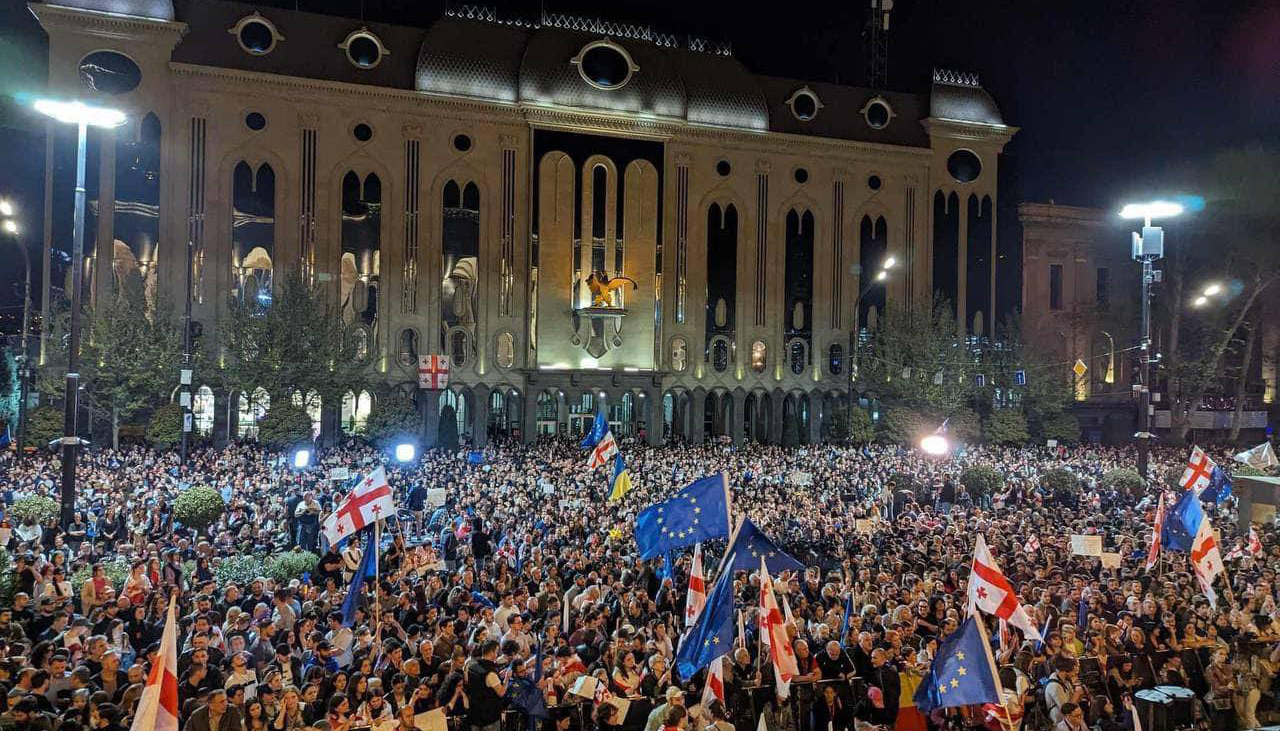
Basis: Canada’s registry began in August 2026 and is unevaluated; the Venice Commission found Georgia’s broader law risked “stigmatizing, silencing and eventually elimination” of foreign-funded associations and media.
Track: registrations and enforcement actions, successful appeals, and civil-society organizations closed or penalized under foreign-influence laws. - Hold platforms and AI providers accountable for election risks.
Actors: regulators, the largest online platforms, AI providers, and those publishing synthetic political content.
Require the largest platforms to assess and mitigate election risks, submit to independent audits, label political ads, remove illegal hate speech, and hear users’ appeals. Require AI providers to mark synthetic content in machine-readable form, and those publishing deepfakes to disclose them.
Basis: the EU’s Digital Services Act requires election-risk assessment and mitigation, and from August 2026 the AI Act’s transparency provisions require marking of synthetic content and disclosure of deepfakes.
Track: published risk assessments and independent audit findings, political-ad labeling, and deepfake disclosures. - Shield journalists and watchdogs from abusive lawsuits.
Actors: governments, legislatures, and courts.
Adopt anti-SLAPP laws allowing early dismissal and cost recovery.
Basis: the EU required such laws by May 2026, but nearly all member states missed the deadline.
Track: anti-SLAPP laws adopted, early dismissals granted, and costs recovered by defendants. - Teach civics and media literacy.
Actors: education ministries, teacher-training institutions, and schools.
Teach how institutions work, citizens’ rights, and how to evaluate sources, and train teachers accordingly.
Basis: Finland, which builds media education into its curriculum, tops a 2023 index of potential resilience to disinformation, though the index cannot isolate the curriculum’s effect.
Track: curriculum coverage, teachers trained, and assessed student skills in civics and source evaluation. - Reduce the influence of large donors.
Actors: legislatures, election-finance regulators, and municipal governments.
Cap contributions, require prompt disclosure of campaign and third-party election spending and its ultimate funding sources, enforce anti-evasion rules, and test small-donor alternatives such as democracy vouchers.
Basis: 48,071 Seattle residents used vouchers in 2021; users resembled the electorate more closely than cash donors did.
Track: share of spending with disclosed ultimate sources, enforcement actions, and the number and diversity of small donors. - Close the channels for corruption.
Actors: governments, anticorruption agencies and prosecutors, and beneficial-ownership registries.
Secure the tenure and budgets of anticorruption prosecutors, verify and penalize false asset declarations, and keep accurate beneficial-ownership information, as FATF requires.
Basis: in 2025, protests and EU pressure led Ukraine to restore its anticorruption agencies’ independence within days of its removal.
Track: anticorruption agency budgets and leadership tenure, asset declarations verified and sanctioned, and beneficial-ownership data accuracy. - Give citizens a structured voice in decisions.
Actors: national and local governments, parliaments, and independent facilitators.
Convene citizens’ assemblies selected by lot, using tools such as Polis, and commit in advance to respond by a deadline and report on implementation; pilot liquid democracy with evaluation.
Basis: the OECD has analyzed close to 300 such processes; Ireland’s assembly on abortion led to the 2018 referendum.
Track: assemblies convened, recommendations answered by the deadline, and recommendations implemented. - Fill the gap in democracy assistance.
Actors: democratic governments, the EU, and foundations.
Give multi-year, locally directed support to independent media, election observers, and civil society, while protecting recipients.
Basis: the United States “abruptly ceased most of its democracy funding,” and France, Germany, the Netherlands, and Sweden have also cut democracy aid since early 2025.
Track: democracy-assistance funding by donor, share that is multi-year and locally directed, and independent outlets and observer missions sustained. - Make transitions inclusive and time-bound.
Actors: transitional leaders, political parties, civil society including women’s organizations, and regional and international mediators.
Agree an inclusive transition framework, constitutional reform process, and credible election timetable with broad participation; bring the military, police, and intelligence services under civilian control; and address past abuses.
Basis: International IDEA drew these lessons from interviews with 13 political leaders who led transitions.
Track: election timetables met, civilian oversight of security services established, and transitional-justice measures completed.
Regional Considerations
Updated October 7, 2026
Sub-Saharan Africa: Democracy in the region weakened again in 2025. Across Africa as a whole, Freedom House’s 2026 assessment, covering 2025, found political rights and civil liberties deteriorating in 18 of 54 countries and improving in just 11. Military rule has spread: Madagascar and Guinea-Bissau became the eighth and ninth African countries to experience coups since 2019, and a coup attempt in Benin failed in December 2025. The juntas in Burkina Faso, Mali, and Niger left the Economic Community of West African States in January 2025, weakening the bloc’s leverage over their political transitions. In several countries, elections consolidated authoritarian rule. Noncompetitive votes strengthened coup leaders’ grip in Chad, Gabon, and Guinea; Gabon’s return to elections raised its scores with both Freedom House (from 21 to 25/100) and EIU, but virtually all of its new legislators support the president, showing that restoring elections does not by itself restore competition. In Tanzania, whose Freedom House score fell seven points to 28/100, major opposition candidates were barred, the president was declared the winner with over 97% of the vote, and the UN human rights office reported that hundreds of protesters were killed.
Access Now documented 30 internet shutdowns in 15 Sub-Saharan African countries in 2025, mostly during protests and elections, and Reporters Without Borders rates press freedom “difficult” or “very serious” in 29 of the region’s 48 countries, as Sahel juntas use security and cybersecurity laws against journalists.
There are counter-currents, especially in Southern Africa. In 2024, Botswana’s ruling party lost power for the first time in 58 years and accepted defeat, and South Africa’s ANC lost its majority and formed a coalition government. In Malawi, the incumbent president accepted defeat in 2025 and power passed peacefully to the opposition, lifting the country into the Free category (68/100) for the first time since 1998. EIU’s Democracy Index 2025 upgraded Malawi and Senegal to “flawed democracies,” the latter after new laws protecting whistleblowers and guaranteeing access to information. Young Africans are pressing for accountability. Youth-led “Gen Z” protests forced Kenya’s president to dismiss almost his entire cabinet in July 2024, while protests in Madagascar in 2025 ended in a military takeover, a reminder that mobilization alone does not produce democratic government. EIU warns that without institutional reform, rising participation could produce frustration and instability rather than democratic consolidation.
Structural weaknesses persist. Sub-Saharan Africa remains the lowest-scoring region in Transparency International’s Corruption Perceptions Index 2025, with an average of 32/100 and only 4 of 49 countries scoring above 50. The wars in Sudan and the Democratic Republic of Congo continue to cause widespread civilian suffering and displacement (see Challenge 10). In Cameroon, Congo-Brazzaville, Equatorial Guinea, and Uganda, long-serving leaders dominate their political systems, weakening political competition.
Middle East and North Africa: Authoritarian rule and weak checks on executive power still define most of the region. In Freedom in the World 2026, which assesses 2025, Israel was the only country rated Free; Jordan, Lebanon, Morocco, and Tunisia were Partly Free. These labels conceal large differences: elected institutions in Jordan and Morocco remain subordinate to powerful monarchies, while Tunisia’s post-2011 democratic gains have been reversed through concentrated presidential power, weakened judicial and electoral independence, and mass trials of opponents. In Egypt (18/100, Not Free), the region’s most populous country, “meaningful political opposition is virtually nonexistent,” and violations in the 2025 parliamentary elections led the electoral authority to annul results in 19 constituencies. In Kuwait, now Not Free, the 2024 dissolution of parliament was followed by prosecutions of critics. There are counter-currents: EIU’s Democracy Index 2025 recorded the region’s first improvement after six years of decline, driven by post-conflict stabilization in Iraq, Lebanon, and Syria. Iraq (31/100, Not Free) held orderly elections in November 2025, with turnout rising from 42% to over 56%, and the last U.S. troops left on 30 September 2026, opening what its prime minister called “a new phase, one defined by Iraq’s sovereignty”; militias operating outside the law and Iranian influence remain obstacles. Lebanon ended a prolonged presidential vacancy and formed a government in 2025. After the Assad regime’s collapse, Syria gained space for journalism, civil society, and private expression, but remains Not Free at 10/100 amid sectarian violence. In Israel, judicial appointments legislation and the attempted dismissal of the attorney general intensified conflict over executive accountability, though the Supreme Court unanimously annulled the dismissal in December 2025. The West Bank (22/100) and Gaza Strip (2/100) are rated Not Free. Iran (10/100) executed at least 1,639 people in 2025, the most since 1989; since the U.S.–Israeli strikes of February 2026 killed Ali Khamenei and his son Mojtaba succeeded him, EIU expects “further authoritarian tightening.” Saudi Arabia (9/100), an absolute monarchy without nationally elected officials, executed a record 356 people in 2025. Reporters Without Borders ranks MENA the worst region for press freedom, with 18 of 19 countries rated “difficult” or “very serious.”
Asia and Oceania: Freedom House’s 2026 assessment, covering 2025, found that freedom declined slightly in the Asia-Pacific region, with 11 countries deteriorating and 6 improving, and EIU’s Democracy Index 2025 recorded the region’s sixth consecutive year of decline. EIU describes a growing divergence between a largely stable tier of full democracies in Northeast Asia and Australasia and intensifying stress in South and Southeast Asia, where political participation rose even as government functioning and civil liberties declined: systems “open enough to generate protests, but too institutionally weak to translate mobilisation into reform.”
The region also contains some of the world’s most closed systems. China scores 9/100, with facial-recognition surveillance expanding from cities into rural areas, and is the world’s largest jailer of journalists. In Hong Kong, all candidates in the December 2025 legislative election were vetted by a government-appointed committee, excluding the prodemocracy opposition, and turnout remained low at about 32%; the same month, democracy advocate Jimmy Lai was convicted under the national security law. Myanmar’s junta held elections from December 2025 to January 2026 in which genuine opposition parties could not compete, and its proxy party was declared the winner of more than 72% of contested national and regional seats; Myanmar’s score fell to 4/100.
According to EIU, the most significant setbacks in 2025 were concentrated in South Asia. India remains Partly Free (62/100); criminal laws that took effect in July 2024 contain provisions that rights advocates say could enable the prosecution of government critics, and EIU cites electoral violence and declining civil liberties. Pakistan’s EIU score fell to an all-time low after new laws empowered authorities to block social media platforms and criminalized vaguely defined “false information.” In Nepal, a September 2025 social media ban triggered a youth-led uprising in which security forces killed protesters and the prime minister resigned. Elections in 2026 offered opportunities for democratic renewal. Nepal’s March vote gave a landslide to the Rastriya Swatantra Party, which campaigned with former Kathmandu mayor Balendra Shah as its candidate for prime minister. In Bangladesh, where the interim government had barred the former ruling Awami League, EU observers judged the February election credible and “genuinely competitive” for the first time since 2008, though only 4% of candidates were women.
Elsewhere the record is mixed. In South Korea, lawmakers quickly overturned President Yoon Suk Yeol’s December 2024 martial-law declaration; he was removed from office and in February 2026 sentenced to life imprisonment for leading an insurrection. Sri Lanka recorded EIU’s largest regional improvement as peaceful elections broadened political competition, and Fiji became Free (72/100) after years of reversing damage from its 2006 coup. In Thailand, the Constitutional Court removed Prime Minister Paetongtarn Shinawatra in 2025, a year after removing her predecessor, though EIU raised Thailand’s ranking after the opposition secured commitments to constitutional reform. In Indonesia, protests over legislators’ housing allowances and other grievances led to thousands of arbitrary detentions. Reporters Without Borders rates press freedom “difficult” or “very serious” in 21 of the region’s 32 countries and territories.
Europe: Freedom House’s 2026 assessment, covering 2025, rates most of Europe Free, and EIU’s Democracy Index 2025 finds Western Europe still the world’s highest-scoring region. Albania, Armenia, Bosnia and Herzegovina, Georgia, Hungary, Kosovo, Moldova, Montenegro, North Macedonia, Serbia, Ukraine, and the territory of Abkhazia are Partly Free; Azerbaijan, Belarus, Russia, and Turkey are Not Free. Freedom House’s Eurasia region was the only one in the world where no country improved in 2025. Georgia fell 4 points to 51/100, Eurasia’s largest decline, as a stricter foreign-agents law and a requirement for government approval of all foreign grants constrained civil society, and opposition figures faced violence and imprisonment. Ukraine (51/100) has postponed presidential and parliamentary elections under the martial law imposed after Russia’s full-scale invasion, though in July 2025 public protests and EU pressure prompted lawmakers to restore its anticorruption agencies’ independence. In Serbia (53/100), protests that began in late 2024 met violent police responses. In Turkey (32/100), Istanbul mayor Ekrem İmamoğlu was arrested in March 2025, shortly before being named the main opposition party’s presidential candidate. Erosion is not confined to the EU’s neighbors: Bulgaria and Italy were among the Free countries with the largest declines in 2025. Bulgaria declined amid unresolved electoral fraud and a judicial council serving on an expired mandate; Italy weakened anticorruption safeguards and restricted organizations working on migration. Slovakia made increasing use of accelerated lawmaking that curtails debate.
Elections also opened opportunities for democratic renewal, although safeguards remained contested. In Hungary, Péter Magyar’s Tisza party defeated Viktor Orbán in April 2026 on record turnout, winning a two-thirds majority; Freedom House identified restoring checks and balances and media freedom as priorities after the election. Romania’s Constitutional Court annulled the entire 2024 presidential election process after intelligence documents described a TikTok campaign “likely orchestrated by a state actor,” a contested decision; Nicușor Dan won the May 2025 rerun. In Moldova, the pro-European ruling party kept its majority in September 2025 despite “unprecedented” Russian interference, including vote buying, although observers noted concerns over the last-minute disqualification of two parties.
The EU announced a European Democracy Shield in November 2025; its European Centre for Democratic Resilience began work in February 2026. European Parliament elections form the world’s largest transnational democratic election, with 50.7% turnout in 2024, and European Citizens’ Initiatives backed by one million citizens from at least seven member states can invite the Commission to propose legislation. Denmark and Finland top Transparency International’s Corruption Perceptions Index 2025, yet 13 Western European and EU countries have declined significantly since 2012. EIU notes that far-right and populist parties, drawing strength from concern about immigration, continue to gain ground, straining the cordons sanitaires that have kept them out of government, most notably in Germany and France. The EU’s Pact on Migration and Asylum, applied from June 2026, aims to share responsibility among member states, but Human Rights Watch warns it will “undermine the right to asylum.”
Latin America and the Caribbean: Competitive elections and peaceful transfers of power coexist in the region with weakening checks on executive power, criminal and political violence, and shrinking civic space. Recent assessments present a mixed picture. EIU’s Democracy Index 2025 recorded the region’s first improvement in a decade, a small rise in its average score from 5.61 to 5.71, with 13 of 24 countries gaining. Freedom House’s 2026 assessment, covering 2025, counted 6 improvements and 12 declines across its Americas region, which also includes the United States and Canada. Cuba, Haiti, Nicaragua, and Venezuela remain Not Free.
El Salvador illustrates the tension between public security and democratic safeguards. Official figures show homicides reaching a historic low in 2024, but more than 90,000 people have been arrested under the state of emergency imposed in March 2022, and the rights group Socorro Jurídico Humanitario reports that at least 458 detainees have died in custody. In July 2025 lawmakers abolished presidential term limits, and El Salvador recorded the region’s largest Freedom House decline for the second year running, as harassment drove dozens of journalists into exile and a foreign agents law tightened control over civil society. In Mexico, the popular election of 881 federal judges, including the entire Supreme Court, drew about 13% turnout amid concerns over interference by the ruling Morena party.
Political violence is a separate threat: Colombia had EIU’s steepest decline in the region after presidential candidate Miguel Uribe Turbay was assassinated in 2025. In Haiti, gang violence has delayed long-overdue elections. Venezuela remains authoritarian. After the U.S. removal of Nicolás Maduro in January 2026, hundreds of political prisoners were freed, but a UN fact-finding mission found in September that the institutions responsible for repression “remain intact,” and interim president Delcy Rodríguez has promised elections without setting a date.
Elections nonetheless continue to change governments peacefully. In Bolivia, voters and state institutions rebuffed interference by a former president’s faction, and power passed to the opposition after nearly two decades, returning the country to Free for the first time since 2002. Losing candidates conceded in Chile in December 2025, in Peru after its June 2026 runoff, following a decade of repeated presidential turnover, and in Colombia in June 2026, where Iván Cepeda accepted a one-point defeat while alleging U.S. interference. In the Caribbean, Freedom House noted less intimidation in Jamaica’s 2025 elections and reforms in Suriname that introduced one-person, one-vote. Brazil’s Supreme Court convicted former president Jair Bolsonaro of plotting a coup and sentenced him to more than 27 years in prison, despite U.S. tariffs and sanctions on the presiding judge. His son Flávio Bolsonaro led the first round of the 2026 presidential election, 47% to 45% over President Luiz Inácio Lula da Silva; their runoff is on 25 October.
Journalism remains dangerous. Reporters Without Borders counted nine journalists killed in Mexico in the year to 1 December 2025, making it the second-deadliest country in RSF’s annual tally. RSF also reports that press freedom in the Americas has fallen 14 points since 2022, with Nicaragua, Cuba, and Venezuela among the world’s lowest-ranked countries; Brazil, by contrast, has risen 58 places in the ranking since 2022.
North America: The three main democracy indices all recorded a significant decline in the United States in 2025. Freedom House still rates the U.S. Free, but its score fell 3 points to 81/100, the lowest since numerical scores began in 2002. V-Dem downgraded the U.S. from liberal to electoral democracy for the first time in over 50 years, citing the most rapid “executive aggrandizement” in modern history and a sharp weakening of legislative constraints on the executive, although it found the electoral components of democracy “stable – for now.” EIU’s Democracy Index 2025 dropped the U.S. six places to 34th, with its score for functioning of government the lowest since the index began, but credited the courts with limiting the decline. A federal court permanently barred a 2025 executive order requiring documentary proof of citizenship to vote, ruling that “the Constitution does not grant the President any specific powers over elections.” After the Supreme Court limited the president’s authority to federalize state National Guard units, the administration withdrew troops from Chicago, Los Angeles and Portland in January 2026. Press freedom has come under similar pressure. Reporters Without Borders ranked the U.S. 64th in its 2026 index, down seven places, saying the President “has turned his repeated attacks on the press and journalists into a systematic policy.” On 21 September 2026 he barred CNN, MS NOW and Politico from the White House over what he called “unfavorable coverage.” The Justice Department defended the ban on national-security grounds, but three days later a federal judge ordered their access restored, finding that the journalists had been denied due process.
Electoral participation remains high. Turnout rose from 61.4% in 2016 to 66.8% in 2020 and was 65.3% in 2024, and the 2024 result was certified and power transferred without disruption. Confidence is fragile ahead of the November 2026 midterms. Ten states have redrawn their congressional maps mid-decade, starting with Texas, with California responding in kind. In the spring 2026 Harvard Youth Poll, only 33% of 18- to 29-year-olds trusted that the midterms would be conducted fairly, and their trust in the federal government fell to a record-low 15%. Contribution limits have done little to contain the role of money: outside spending on the 2024 federal elections reached a record $4.5 billion, more than $1 billion of it from groups that do not fully disclose their donors. Wealth from the technology sector has become a political force in its own right. Elon Musk, the owner of X, gave Trump and other Republican candidates more than $290 million in 2024 and then led the Department of Government Efficiency’s cuts to federal agencies, which the administration presented as eliminating waste but which EIU notes were directed by an unelected, unconfirmed “special government employee.” Meta ended third-party fact-checking in the U.S. in January 2025, saying it had become “a tool to censor.” In his farewell address, President Biden warned that “an oligarchy is taking shape in America of extreme wealth, power, and influence” and of “the potential rise of a tech-industrial complex.” Foreign disinformation exploits these divisions. A bipartisan Senate Intelligence Committee report found that Russia’s 2016 social-media campaign was designed “to sow discord in American politics and society” and targeted African-Americans more than any other group. In 2024 Russia, Iran and China all ran influence operations, with China targeting down-ballot candidates. Russia and China deny such activity. Campaigns of this kind can move people from “I don’t like x” to “I hate x” to “x is the enemy” to “attack x.” Yet federal capacity to counter them has shrunk. The State Department closed its foreign-disinformation office in April 2025, saying it had censored Americans. The FBI’s Foreign Influence Task Force has been dissolved, and the federal cybersecurity agency has halted most of its election-security programs. Researchers are testing remedies: showing voters that their opponents value democracy as much as they do proved the most effective of 25 interventions tested at reducing support for undemocratic practices and political violence.
U.S. support for democracy abroad has contracted sharply. USAID ceased operations on 1 July 2025, and its remaining programs moved to the State Department. The United States, previously the world’s largest funder of democracy aid, has “abruptly ceased most of its democracy funding”, although the National Endowment for Democracy continues with congressional support. No government stepped forward to continue the Summit for Democracy process, which the Biden administration launched in 2021 and whose third summit South Korea hosted in March 2024. The administration’s use of force against authoritarian governments has also been contested. Several UN Security Council members called the January 2026 capture of Venezuela’s Nicolás Maduro, which the administration described as a law-enforcement operation, a violation of international law. More than 100 U.S. international law experts called the February 2026 strikes on Iran, launched without congressional authorization and justified as collective self-defense, “a clear violation of the United Nations Charter.” (On the conflicts themselves, see Challenge 10.)
Canada remains one of the world’s strongest democracies: Freedom House rates it 97/100, and EIU’s Democracy Index 2025 moved it up from 14th to 9th after the April 2025 election, whose 69% turnout was the highest since 1993. Its main vulnerability is foreign interference. A public inquiry concluded in January 2025 that interference did not change which party formed government in 2019 or 2021, although results in a small number of electoral districts may have been affected. It found no evidence of “traitors” in Parliament, identified party nomination contests as a gateway for foreign states, and called information manipulation “the single biggest risk to our democracy.” During the 2025 election, the monitoring system set up under the Plan to Protect Canada’s Democracy (2019) detected Chinese and Russian information operations, including transnational repression targeting a Conservative candidate, but judged that none had a material impact. Canada has since legislated on the inquiry’s findings. A Foreign Influence Transparency Registry came into force in August 2026. The Strong and Free Elections Act (June 2026) bans deceptive deepfakes of electoral actors, closes anonymous and foreign funding channels, and protects nomination contests. It passed after an earlier reform bill died when Parliament was prorogued from January to March 2025. Immigrants make up 23% of the population, the highest share in the G7, and Canada’s anti-discrimination laws receive a perfect score in the Migrant Integration Policy Index (2024 data). Canada has also moved closer to the European Union: at their June 2025 summit the two committed to jointly counter foreign information manipulation and interference, and in September 2026 the European Commission proposed making Canada the EU’s first “associate member”, a status whose terms are yet to be defined.