ECGI April 2026: Iran war shock reshapes regional risk
- On 10 April 2026
- 0 Comments
- ECGI, Economic crime, geopolitics, index, SAFN
The April 2026 update of the Economic Crime and Geopolitics Index (ECGI), published by the South Asia Foresight Network, highlights a significant escalation in regional risk across South and Southeast Asia, driven primarily by the geopolitical shock of the ongoing conflict involving Iran.
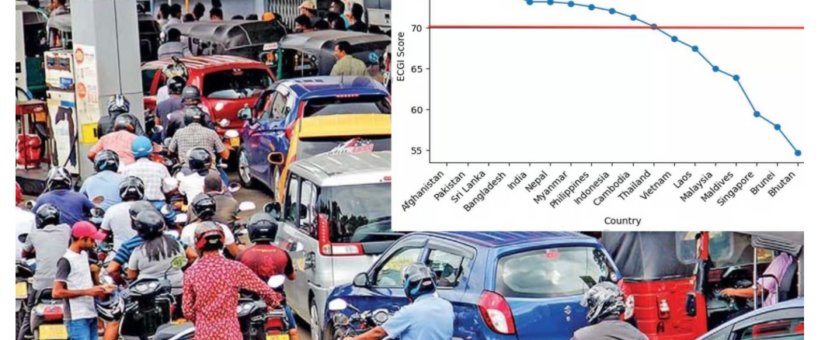
A comparison between November 2025 and April 2026 shows a clear expansion of countries in the high-risk category (ECGI ≥70). Thailand has crossed the high-risk threshold, while Philippines and Indonesia have further consolidated their positions. South Asia remains the epicenter of risk, with structurally vulnerable countries such as Pakistan and Bangladesh recording notable increases.
Crucially, this shift is not primarily driven by domestic governance deterioration, but by external geopolitical pressures. Energy supply disruptions, rising import costs, and instability in maritime trade routes have amplified risk across the region, effectively transforming a previously fragmented landscape into a continuous high-risk corridor spanning the Indo-Pacific.
A key finding of the report is the transformation of Geopolitical Influence (GI) into a shock-sensitive driver of risk. This is shaped by three dynamics: the growing strategic importance of maritime chokepoints affecting countries such as Sri Lanka, Singapore, and Malaysia; the spillover of instability in contexts like Myanmar and Afghanistan; and the increased vulnerability of supply chain hubs including Vietnam and the Philippines.
The case of Sri Lanka illustrates the divergence between perceived reform and actual exposure. Despite improvements in corruption perception indicators, its ECGI score has risen significantly, reflecting persistent structural weaknesses—particularly in the energy sector—where governance gaps are being amplified by the ongoing crisis.
Overall, the ECGI framework—combining CPI, Economic Crime Severity (ECS), Public Response Exposure (PRE), and Geopolitical Influence (GI)—demonstrates that geopolitical disruption is now outpacing governance reform. Economic crime risk is increasingly systemic, regionally interconnected, and externally driven.