30 years of The Millennium Project: honoring the past, shaping the next thirty years
- On 21 February 2026
- 0 Comments
On the occasion of its 30th anniversary on February 14, The Millennium Project celebrated three decades of global, participatory futures research dedicated to improving humanity’s long-term prospects. What began in 1992 as a feasibility study by Ted Gordon and Jerome Glenn, supported by Elizabeth Florescu over the years,has evolved into a decentralized, trans-institutional, and globally recognized think tank, connecting Nodes and contributors around the world in a shared effort to explore and shape alternative futures.
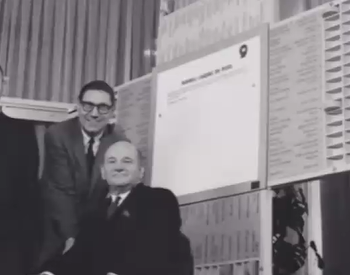
We opened the informal celebratory meeting with a minute of silence in memory of all those who have contributed to the Project over the years. We began by honoring Ted Gordon, co-founder and pioneer in futures research, whose work on cross-impact analysis and the advancement of the Delphi method helped lay the intellectual foundations of global foresight practice. Many others were also rememberd for their valuable contributions over the years.
The gathering combined celebration with forward-looking reflection. While acknowledging the many milestones achieved over the past thirty years, participants focused primarily on the challenges and responsibilities of the decades ahead. There was broad agreement that the need for independent, non-profit, globally collaborative futures research is stronger than ever. In a context marked by accelerating technological change, environmental stress, geopolitical tensions, and social fragmentation, structured foresight and collective intelligence are indispensable.
Discussions addressed emerging forms of Artificial Intelligence (AI), the governance of Artificial General Intelligence (AGI), intergenerational fairness, and the importance of youth involvement in decision-making processes. Ideas such as establishing new thematic or generational Nodes — including a possible Orbital Node, a Youth Node or Committee in collaboration with other partners — were explored as ways to broaden participation and strengthen intergenerational dialogue. A phrase that resonated throughout the meeting described the Project as “a think tank with a heart,” capturing both its analytical rigor and its ethical commitment to humanity’s future.
Over three decades, The Millennium Project has generated substantial and tangible impacts. It was instrumental in putting environmental security on the world’s agenda and in encouraging militaries around the globe to address environmental risks. It contributed to adding the natural environment as part of UN Status of Forces Agreements and demonstrated that truly global futures research is possible through distributed, participatory collaboration.
The Millennium Project organized one of the most comprehensive body of foresight methods in Futures Research Methodology (FRM 1.0, 2.0, and 3.0). It created the first global collective intelligence system on the future, the Global Futures Intelligence System (GFIS), and produced twenty editions of the State of the Future Report. It also invented the State of the Future Index (SOFI) as a pioneering measurement framework, developed Futures: The Encyclopedic Dictionary at its 2nd edition, in collaboration with the Mexico Node, and defined the 15 Global Challenges facing humanitt, which continue to guide research and dialogue worldwide. It has published influential thematic studies such as Work/Technology 2050, examining the long-term future of labor, automation, and technological transformation, and led many editions of World Futures Day, a global futures participatory methods for open discussions around the world now at its 14th edition.
More than 70 futures research reports have been produced, engaging over 4,000 participants across regions and cultures. The establishment and continued collaboration among an international network of Nodes has strengthened global foresight capacity, while activities such as articles, university courses, podcasts, keynote lectures, and internships have improved thinking about the future at multiple levels. The Millennium Awards have supported students addressing the 15 Global Challenges, helping cultivate new generations of futurists.
Institutionally, the Project has played a catalytic role in bringing the Council of Presidents of the United Nations General Assembly to address AGI governance and in encouraging both the Club of Rome and the World Academy of Art and Science to engage with AGI governance issues. Historically, when operating under the American Council for the UN University, The Millennium Project was the second UN-related organization to establish a website, demonstrating early digital leadership.
Perhaps most importantly, The Millennium Project has given many people a more optimistic view of the future while not avoiding the worst of what humanity is doing at a global level. Following the scenario-building approach associated with Herman Kahn, it explores baseline, better, and worse global futures, illustrating what is possible in both positive and negative directions. Very few organizations in the world engage in creating such comprehensive, long-term global scenarios, a challenge to which The Millennium Project tried to respond when it was launched, making this work uniquely valuable. In doing so, The Millennium Project encourages informed choice, strategic anticipation, and the deliberate shaping of preferable futures rather than passive acceptance of probable ones.
Looking ahead, several priorities define the next phase of work. FRM 3.0, which includes 37 methods now, will be updated to explore the implications of AI for each method, with the potential addition of approximately ten new methods. Work on national and international governance of AGI will continue in collaboration with the Council of Presidents of the United Nations General Assembly, the Inter-Parliamentary Union, the World Academy of Art and Science, and the Club of Rome. The United Nations will be encouraged to seriously consider the creation of a dedicated governance system for AGI, building on the models developed in The Millennium Project’s study, which is currently being completed and will include three alternative scenarios.
Further work will explore alternative futures for social structures and social coherence in light of AGI, changing political norms, and evolving multilateral dynamics. The 15 Global Challenges will continue to be updated online, the State of the Future 20.0 will be promoted, and the concept of a digital twin will be explored to create a more interactive and accessible knowledge platform for the Project’s materials.
After thirty years, The Millennium Project has evolved from a pioneering initiative into one of the most active and influential global futures think tanks. As futures studies remain vital to the direction of human civilization, the global family of the Millennium Project continues its shared journey — committed to making deeper and more valuable contributions to humanity’s long-term development and to shaping positive futures for generations to come.